

Seasonality in Crypto: Does the Market Follow Seasonal Patterns — and How Can You Capitalize on Them?
In traditional equity markets, seasonality is a well-researched topic: "Sell in May and go away," the "Santa Claus rally," and the "January effect" have become familiar patterns for mainstream investors. As the conversation shifts to the crypto market, a similar question arises: Are there specific periods of the year when the market tends to perform better — or worse?
The answer is: Recurring patterns do exist, but they are not consistent enough to use in isolation as a buy/sell trigger. However, when combined with other data sources, seasonality becomes an extremely valuable supplementary layer of information that helps you shape the broader picture.
Historical Seasonality of Crypto Prices
Looking at historical BTC data from 2013 to the present, several month-by-month tendencies emerge with a reasonably high degree of recurrence:
-
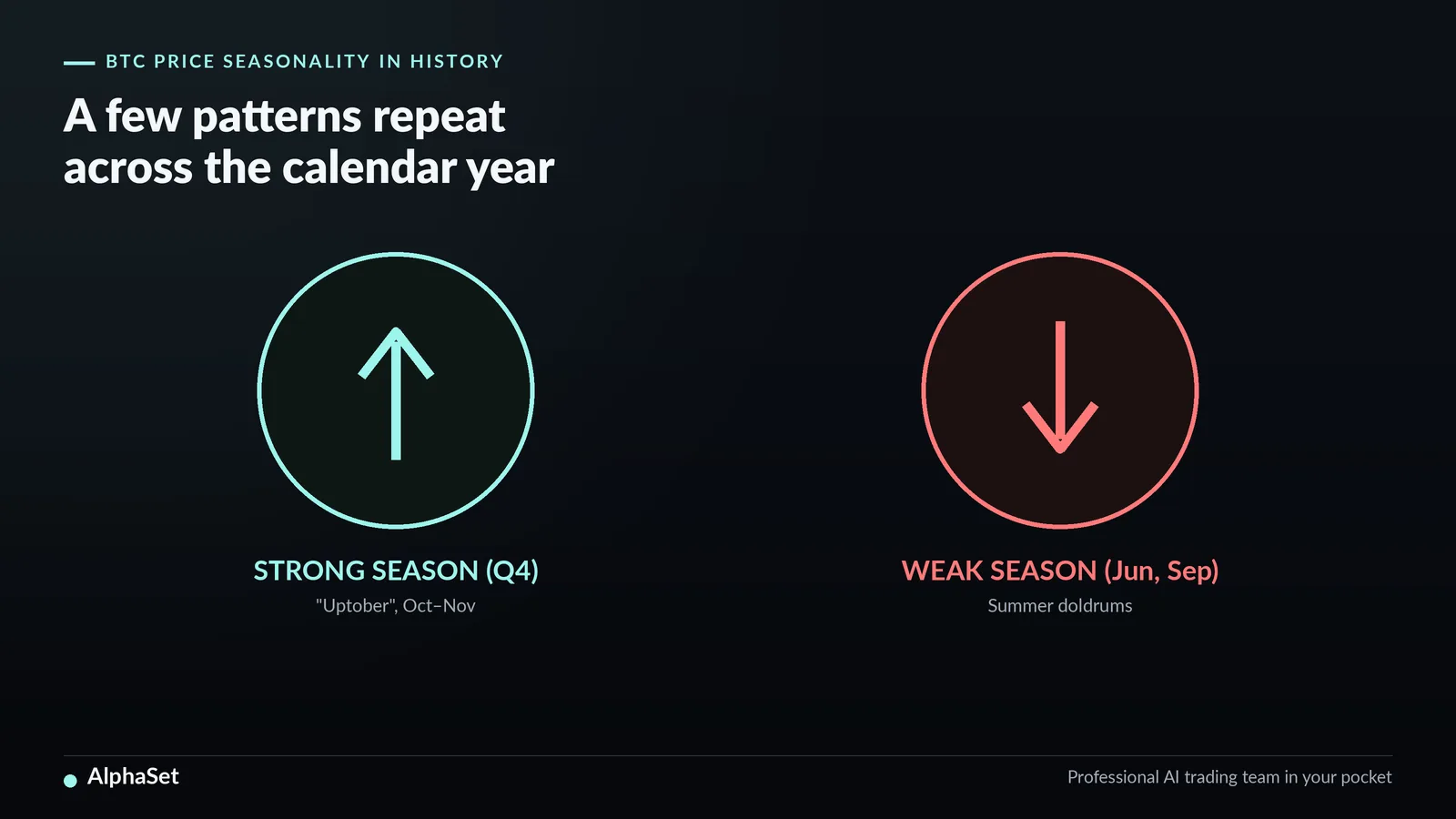
Q4 — particularly October and November — has historically recorded exceptionally strong growth milestones. Across major cycles such as 2013, 2017, 2020, and 2021, Bitcoin delivered its most powerful breakouts during this window. October has even been dubbed "Uptober" by the community.
-
June and September tend to be the worst-performing months of the year. September has earned the nickname "September curse" due to the sharp drawdowns seen across multiple years.
That said, this data must be interpreted with great caution. The crypto market has only roughly 15 years of history, encompassing fewer than 5 complete Halving cycles. This is a statistically insufficient sample size from which to derive reliable laws. Many past occurrences were simply the result of a specific event that year — not because any natural mechanism forces prices to behave that way.
Seasonality of Funding Rate: A Pattern With a Clear Mechanism
While price seasonality remains heavily debated, the seasonal pattern of Funding Rates is far more clearly defined and reliable, precisely because it has an identifiable economic mechanism behind it.
In a Bull Market, Funding fees are typically pushed very high during two periods: Year-end (when funds and traders scramble to dress up their portfolios for year-end reporting) and the New Year (the "new year, new opportunities" sentiment fuels greedy Long positioning).
Low or negative Funding Rates tend to emerge during the Summer Doldrums, roughly June through August. This is the period when traditional financial markets enter their vacation season — liquidity thins out, trading volume drops, and the market is starved of catalysts. Cooling buy-side pressure drags Funding fees down sharply.
This is actionable intelligence for those who favor Funding Arbitrage strategies. They can target high-Funding seasons to maximize returns and adopt a strictly defensive posture when the quiet summer months arrive.
Why You Shouldn't Trade Based Solely on a Seasonal Calendar
The evidence is clear: even the most robust seasonal rules can be broken at any moment when the macro backdrop shifts.
Look at 2022: the "Uptober" breakout that everyone anticipated simply failed to materialize, because the market was buried deep in a crypto winter following the catastrophic cascading collapses of Terra/Luna and FTX. Similarly, the "January effect" that same year was brutally snuffed out as the U.S. Federal Reserve launched an aggressive rate-hiking campaign to rein in inflation.
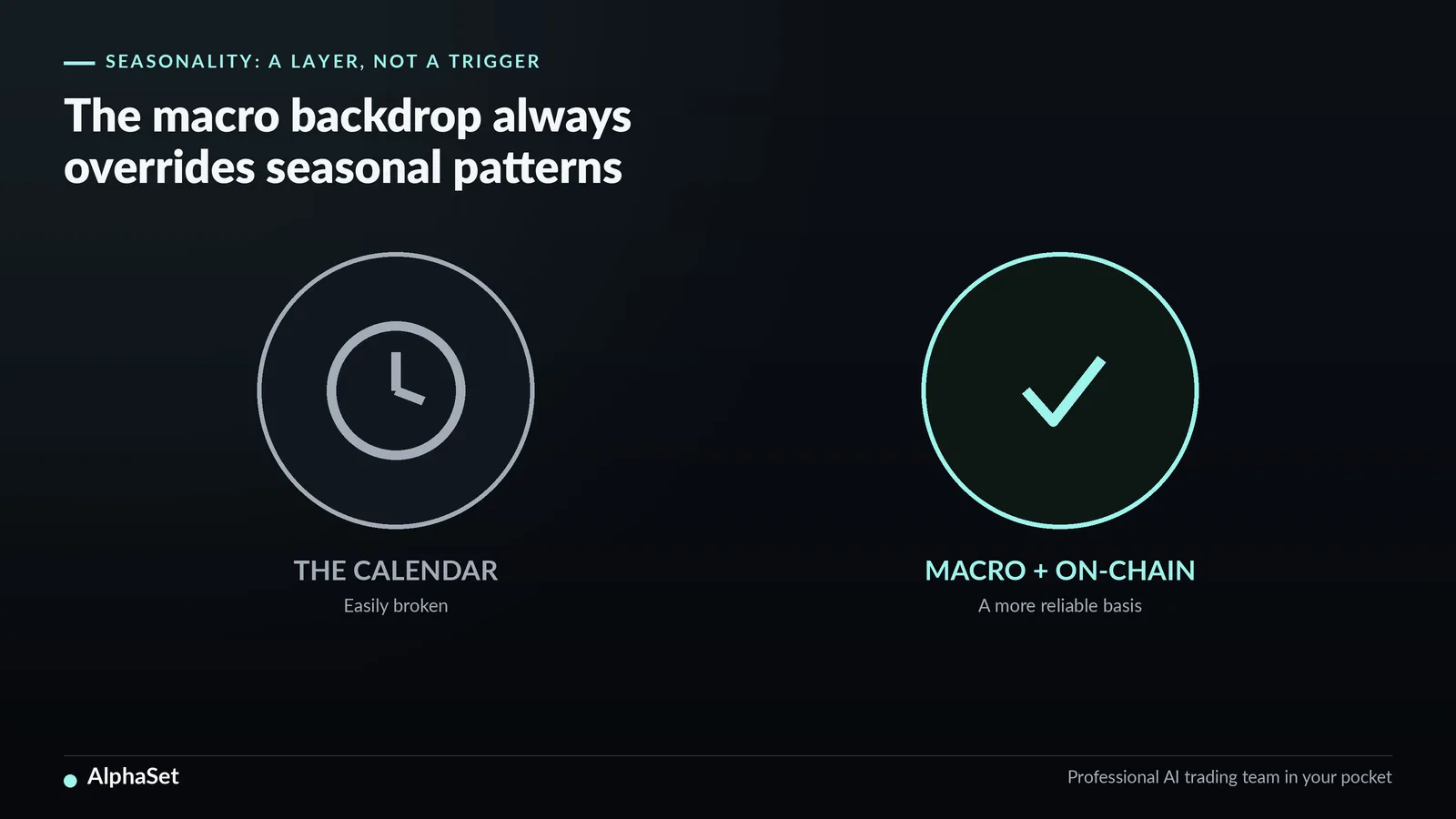
The macroeconomic environment, the liquidity cycle, and idiosyncratic financial shocks in any given year always hold supreme authority, completely overriding any seasonal pattern on paper. Traders who rely on seasonality without considering the broader context are routinely disappointed when the market refuses to follow the script.
How to Use Seasonal Information Effectively
What Is Alpha Crypto?
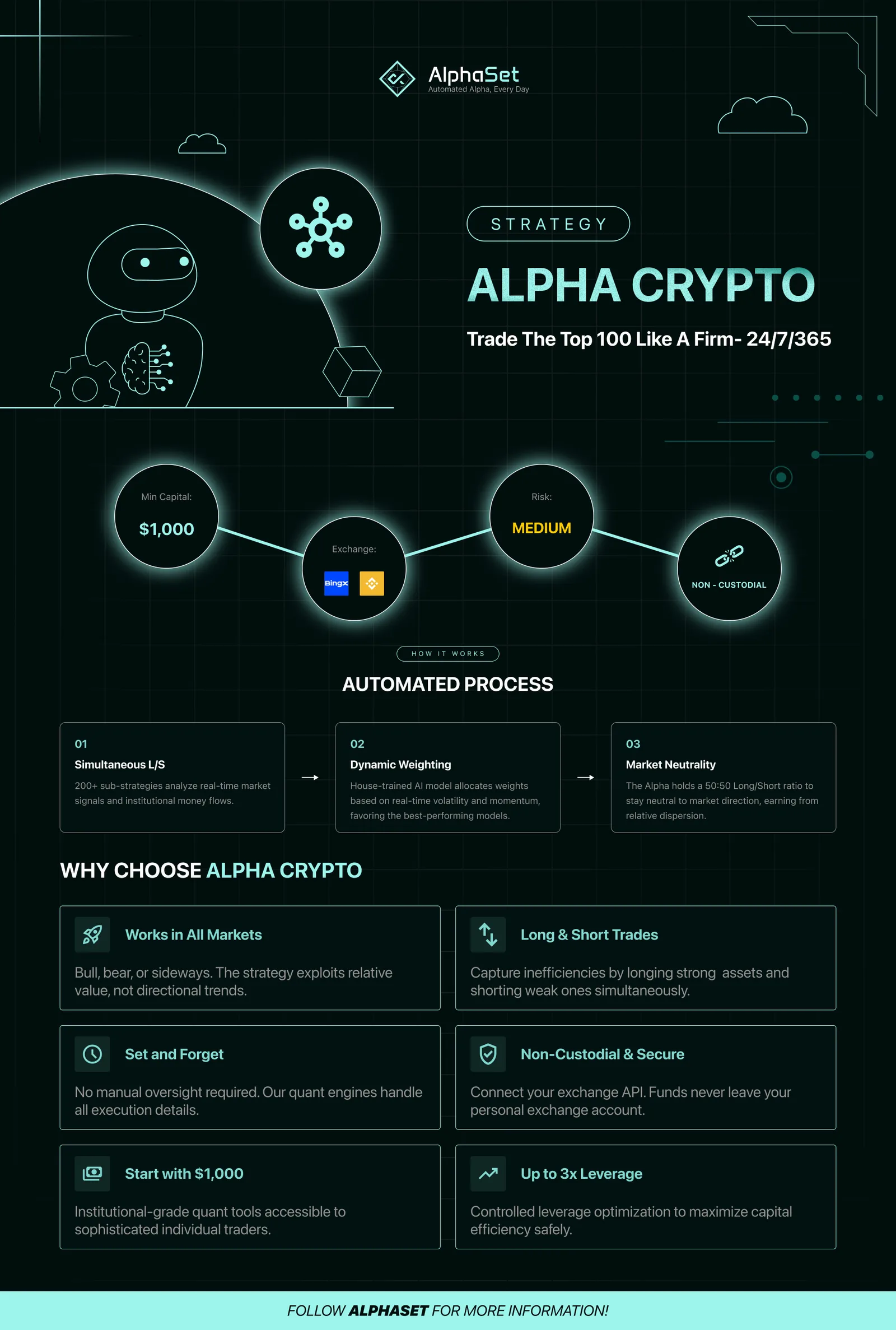
Alpha Crypto is AlphaSet's automated long/short trading strategy operating across the top 100 coins by market capitalization — built on AlphaSet, a quantitative investment platform designed for individual investors.
Rather than simply buying and holding, Alpha Crypto scores all 100 coins, goes long on the strongest and short on the weakest, allowing you to generate returns in both market directions instead of waiting for prices to rise.
- The long/short ratio is automatically adjusted to current market conditions, driven entirely by data and free from emotional bias.
- Everything runs fully automated 24/7 via API on your own exchange account. Your capital remains on the exchange at all times; AlphaSet holds order-placement permissions only — never withdrawal rights.
How Alpha Crypto Applies Seasonality as a Supplementary Information Layer
Alpha Crypto treats seasonal data as a supplementary information layer within its macro indicator group — not as an order trigger.
The system assigns weight to seasonality only when it converges with real-time signals from On-chain fund flows and technical models. If October arrives and other indicators are simultaneously flashing green, the Long signal score receives a positive boost.
Conversely, if the calendar points to a historically bullish month but On-chain data signals that capital is quietly rotating out and the macro environment is deteriorating, the engine will completely disregard the seasonal factor to protect your account. The engine acts on real data — not on the calendar.
When investing with AlphaSet, your capital and assets are always kept 100% secure in your own personal exchange account. AlphaSet connects solely through a secure API gateway to execute automated orders. You pay only a fixed monthly usage fee; all profits are entirely yours, with no performance fees.
Ready to outperform with AlphaSet?
Activate the AlphaSet strategy today and let our quants manage your exchange sub-accounts automatically.
Activate Alpha Crypto